


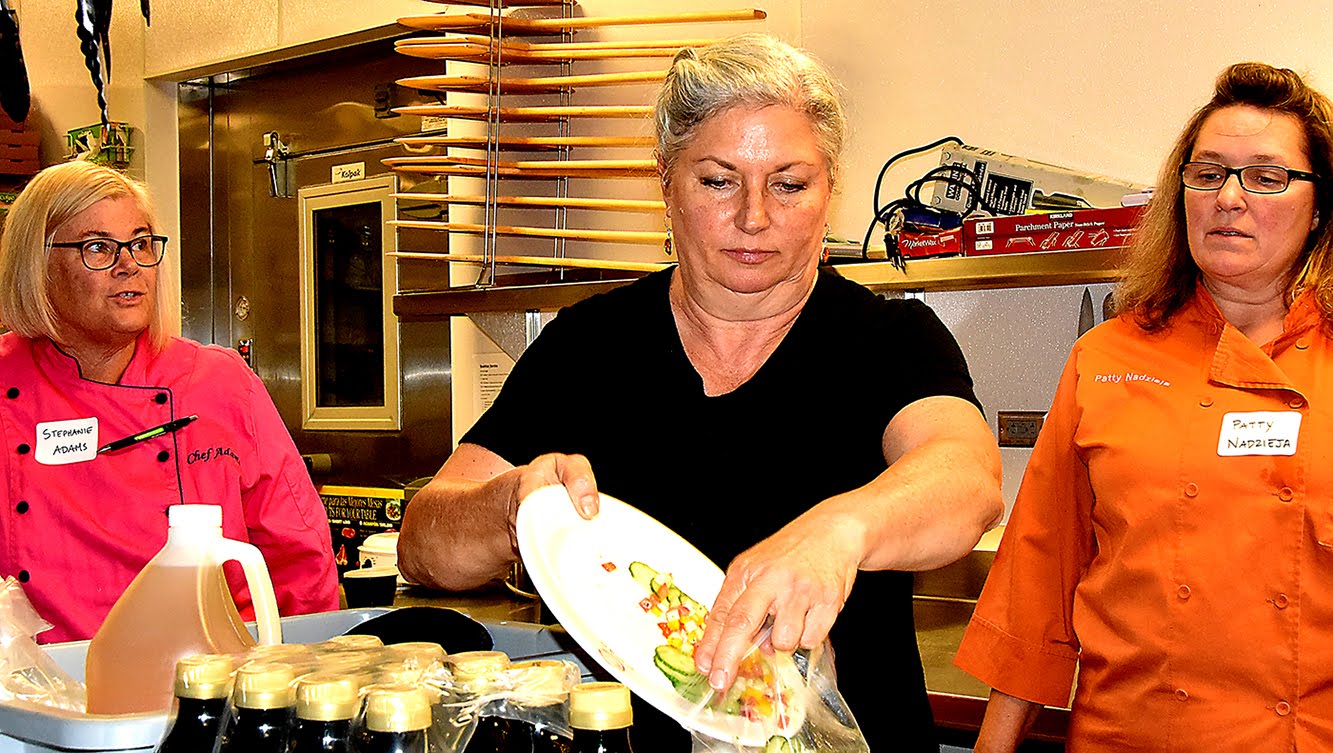
There are only two more formal practice sessions left before the 2012 C-CAP Arizona culinary finals.
So, roughly, 15 days during which you will have ample opportunity to either practice some more or whip yourself into a frothy panic fueled by fear and increasing evidence that you need additional time to practice.
Let's focus on the first.
That's because this year's competition shows all indications of being extremely - uh, competitive. That is to say, skill levels among contestants are roughly par, with some having a critical academic advantage.
So, here's what we're gonna do this week - we're gonna go back in time, and give you a few more keys.
These particular keys are from Chef Francine Marz. Chef Marz, a major competition veteran now with The Art Institute of Phoenix, provided a major guide to improved competition performance.
Today - a focus on food and plating.
In this contest, the chicken comes before the egg
Supreme poulet chasseur avec pommes chateau (Hunter’s chicken with turned, sauteed potatoes)
· Make sure your chicken breast is about the right size for a serving. If it’s too large, cut it.
· Stock needs to be perfectly clear, with a good taste.
· To help sweeten the stock, add more onion.
· Be careful with the glace. Even a small burned bit in your saucepan will give it a bitter,
· burned taste. (Butter will help take care of lingering bitterness.)
· Don’t leave tomatoes or potatoes sitting in an ice bath.
· Remember to season the potatoes.
· Let the potatoes get just a little color in the saute pan.
· Be careful how you slice the chicken for plating your chicken; don’t fan it out too much (it will cool too quickly).
· Have some sauce under the chicken and some sauce or garnish on top.
· Create a presentation with a delicate look to it; if you use a parsley or herb garnish, mince finely and don’t let it clump. Also, it belongs on the food, not the plate.
How to make, fill and fold a crepe
· Timing, timing, timing. If you make your pastry cream first, drop a sheet of plastic wrap right on top and keep it in an ice bath at your station.
· Make sure your eggs aren’t curdling; keep stirring!
· Keep your pastry cream smooth and as light (thin) as possible.
· Keep your crepes as thin as possible.
· Make sure your crepes are the right color.
· Practice folding your crepes.
· Play with the presentation before you get to competition, to give yourself a plan and options in plating.
· Be careful about your chocolate sauce, and how you pipe it onto the crepes and plate.
· Chocolate piping doesn’t need to be too glitzy!
· Finally – don’t forget to taste! The pastry cream should taste sweet enough, with a whisper of vanilla.
NEXT up:
Chef Marz had plenty more to say about competitions. You'll flip your tocque over her suggestions for getting your game together so that it's really on.


