14sept19

14sept19

Tuesday, January 26, 2016

Lookin' good, students - professional, too. And it counts!

Oh, those cunning CCAP judges...picky, too.  

Make sure you know and plan ahead for the Preliminary Competition uniform requirements for all competitors.  There are 10 points on the score sheet for uniform; you will lose points if the uniform/appearance does not meet the following:

  • Chef coat (any color, your school name can be visible)
  • Black or chef pants
  • Kitchen shoes (Wal-Mart and Payless have acceptable shoes for less than $15, no sneakers/tennis type shoes)
  • Apron (full apron or bistro style acceptable)
  • NO jewelry
  • Minimal make up - consider NO makeup, since some judges mark competitors down for any makeup
  • Hat - any type of kitchen hat is acceptable - ALL hair must be contained (no bangs, tendrils, etc.)
  • No fake fingernails, fingernail polish
  • No detectable scent (good or bad)

Friday, January 22, 2016

Practice notes; mid-January

Set up and sanitation.  Those are key words for CCAP competitors right now, in the middle of practices for the 2016 Arizona preliminaries on February 6.

Here's the deal.  

Students, remember you are training for a profession. Professional kitchens are, first, all about the food: which needs to be purchased, so there is always a budget. You're using the food - you need the budget.

To maximize the value of the food (that pesky budget), you need to be prepared to use every useful bit of the food in the walk-in and pantry.

Remember - do not mix food scraps and garbage. Garbage is thrown out. Food scraps - soup, broth, sauce (pieces large enough - smoothie, anyone?)

Be especially mindful of sanitation. Keep one food on your cutting board at a time - and only the equipment you're using for that task.


Check the notes below and know that there will be additional practice notes posted after the January 28 practice!

Get set for the preliminaries

Sheesh.  The teachers, the practice chefs….boy. It's like they only know one word: practice!

And all you want to do is figure out how to ace the preliminaries.

Good news, kids.

Check out these lists and tips (below!) for all you need to take your culinary game to what is not just the next level - but the next step to winning this game.

First, here's a link to CCAP's pages on preliminary competition recipes and tips.  Go ahead and scroll through to SKIP THE RECIPES AND TIPS!* Go straight to the equipment list (preliminary competition check list)!

Make a copy of that list for yourself, so you have a checklist. It's what you'll need to take to every practice and to competition. In order.


*WHY??  You should have these recipes memorized by now. The tips on these pages are all those you should have heard in practice (and if you have not yet been to a formal salad/omelet practice session, get busy and find one you can attend. These sessions include informal critiques of technique, presentation and taste  by professional chefs and culinary teachers.)

Not a tossed salad!

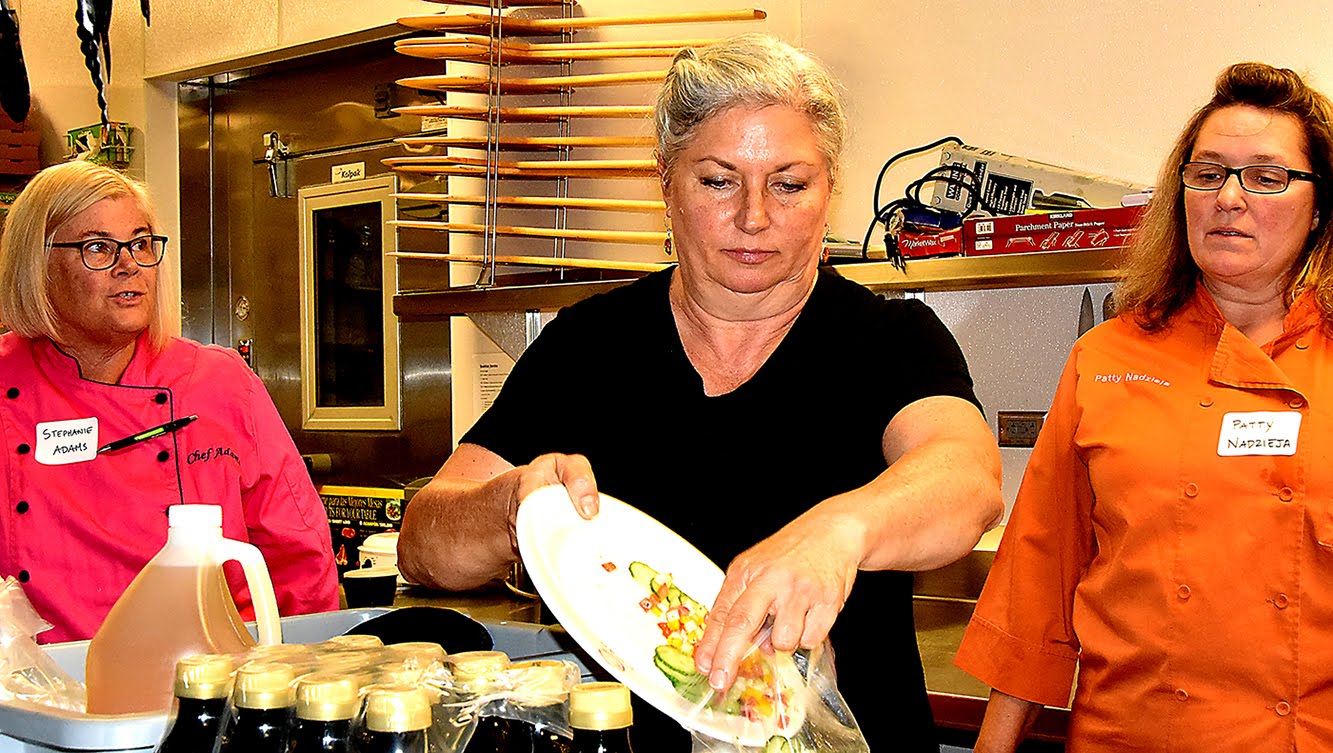
Let's look at how to make the CCAP salad so you end up with evenly diced vegetables dressed with a tasty, mildly citrus-y vinaigrette in a cunning cucumber mold.

Take a deep breath - this is easy with fewer than 15 very logical steps. (Remember: you have this recipe memorized.)

* Core, score, blanch and shock your tomato - and then take it out of the ice as soon as it's cool. Put it back on your mise en place tray and leave it alone for now

* Make vinaigrette, taste. Adjust seasoning and put it on top of the ice bath
* Peel, dice jicama (small! 1/4 by 1/4 inch) - put it in the vinaigrette - leave that tomato alone! It does NOT go into the vinaigrette YET!
* Dice bell peppers (small!) - This goes into the vinaigrette!
* Cut onion into small dice - add to vinaigrette
* NOW peel, seed and dice that tomato and add it to the vinaigrette
* Cut cucumber slices for ring mold and plate them into the mold
* Peel, seed and dice the remaining cucumber and add to vinaigrette
* TASTE your salad and adjust seasonings
* Strain all vinaigrette from diced vegetables (you may wish to use cheesecloth to be certain vegetables are seasoned but not dripping)
* Put strained vegetables into mold; clean plate for presentation


TIP - Be sure you have enough diced vegetables to fill your cucumber mold. The current CCAP salad recipe notes "cilantro sprigs for garnish," but keep it to a sprig or two! 


Beat that omelet!


Omelets are devilishly tricky!  

Here's how a few notable chefs remember how they made their first (almost) perfect omelet: http://www.bonappetit.com/people/chefs/article/perfect-omelet-chefs

Now for a few more tips:

Break your eggs on the edge of your cutting board, not your bowl (you don't want any stray bacteria in your omelet).

Agitate your eggs, using a whisk or a fork, making certain to beat them enough to remove any indication of egg white (you need to break the whites so no strings of white show through in your omelet).

[Special note: C-CAP standards are especially rigorous here.  You need to NOT have any clumps, bumps or strings of white showing in your omelet.]

Have your pan hot.  Really, really hot.

Don't let your eggs sit still in the pan; you need to keep the eggs and pan moving.

Fortunately, this won't take long (it's a really hot pan, remember?)

Moving the pan and eggs constantly keeps the curds of egg small, and in this case, small means tender.  You want to have a consistent, very tender feel to your omelet, inside and out.

Shift the eggs to one side of the pan, tilt the pan and use your fork to help roll the omelet out of the pan onto a plate (this should help you have a near-perfect roll to your omelet).  The eggs will still be slightly wet. (Don't forget how Jill and the other practice chefs have shown you how to hold that skillet!)

If your omelet is browning, there are reasons: 
  • You're not stirring it enough while it's cooking.  Omelets cook quickly and you must not stop moving those eggs around.
  • You overcooked it. This omelet does not look entirely dry when it's done; it should have a little glistening sheen to it.
  • You didn't whip the eggs sufficiently to start with:  browning indicates there's albumin - that's egg white! - that wasn't entirely incorporated in your mixing.
  • DON'T FORGET! C-CAP standards ask that this omelet be a nice, golden yellow.  This takes practice!
This omelet only has salt and pepper in it - and it needs enough to be apparent in the taste.  So season judiciously!

Finally, make sure your plate is completely clean before presenting your omelet for judging.  There must be no butter or oil slicks on the plate, and definitely no stray pieces of egg.
Thursday, January 21, 2016